Sunday, 16 October 2016

Saturday, 15 October 2016
TRANSPOTTING OPENING
CHOOSE LIFE
Trainspotting is undeniably the most iconic film of the 90's, with its brutal, satirical drama, it's known to be probably the most realistic depictions of drug abuse in the film industry.
The opening scene of the film is often referred to as the 'Choose life' clip - this is a monologue given by the main protagonist; it is actually a scene from later on in the film but is used to foreshadow and give the audience an insight to the film. The establishing shot of a busy high street on a normal day, is immediately obstructed by two characters running through the chaotic scene whilst being chased the by the police. This lays the foundation of what we can expect to see within the film, illegal actions that may occur. The non diegetic sound we can hear is 'Lust for Life' by Iggy Pop - who is referenced many times throughout the film highlighting the popularity of him at that time period. The music is used as a backing track as the narrator, also the protagonist, begins his monologue (still non diegetic sound). This extremely fast paced opening is conventional to a thriller/drama, and includes scenes such as dark eerie locations.

This POV shot when the protagonist runs into the car, gives the audience a strong sense of danger as we can predict something may jump out infant of him. This causes the audience to feel tense and at ease as we know something the character may not. This also emphasises just how fast pace the scene is and how the protagonist may not view his life as precious in some sense; and the fact that he gets straight back up after being hit by a car suggests he's not fazed by anything. Each character is introduced in this opening scene and their names freeze on the screen for a second, allowing the audience to have a clear sense of who is who - making it easier for them to follow throughout the film.


'Watching Documentary'
The 'Watching' is a Documentary which explores the significance of film openings and their effect on the audience; producers and directors discuss the compulsory elements needed to keep the audience enthused. Thomas Sutcliffe says, "Films need to seduce their audience into long term commitment. While there are many types of seduction, the temptation to go for an instant arousal in almost irresistible." By this Sutcliffe is suggesting that it is extremely important to excite or entice the viewers so much that they have a vigorous urge to keep on watching. He states that an 'instant arousal' may be overwhelming to the audience and may be hard to resist; meaning that by blinding the audience in one part of the film, may leave them satisfied - but by stimulating them through the whole piece, you will be leaving them impressed.
According to director Jean Jacques Beineix, it is important to wait and 'nurture' the excitement throughout the film rather than an 'instant arousal'. He states that you should let the desire grow and then the satisfaction will appear. You shouldn't give the film everything in the first 5 minutes, you let the skill develop with the storyline to achieve a masterpiece.
"A good beginning must make the audience feel that it doesn't know nearly enough yet, and at the same time make sure it doesn't know too little". This statement is important as it gives a perfect balance. If the audience knows to much within the first scene; the film is restricted to growth and development. However, if the audience doesn't know enough, it doesn't set any foundation for what they can expect to see within the film. They must know enough to keep on watching and still be enthused; but not know so much as to what will happen in each scene.
Critic Stanley Kauffmann's interpretation of a 'classic opening': "It would start with an establishing shot of New York city usually shot from the east. Then it was a close up of a building, and the camera would follow up a building to a window, then it would go through the window. Then it would go past the receptionists desk to the private office and there sat the protagonist." This works effectively as, as an audience we can see the location of the film, the profession of the character, and the 'organisation of the world'. It would lead the audience into the film seamlessly and unobtrusively.
Kyle Cooper's title sequence to 'se7en' was known for revitalising openings of the 90's. The public became more obsessed with the title sequence than the film itself. There are a number of elements which make it so enthralling to watch; for example, there it easily over a hundred different shots merged together in the piece. This creates a fast pace action to the title sequence leaving the audience tense and agitated. The messy handwriting in the diary of whom we assume is some kind of psychotic killer, may be parallel to the characteristics of the antagonist. The typography almost had a handwritten feel make the title sequence seem more personal involving the audience.
In 'A Touch Of Evil', Orson Welles' aim was for his title sequence to be shown without credits and without music; this was since he wanted to plunge the audience into the film without giving them time to prepare themselves.The studio on the other hand were a lot more tentative. They didn't understand the opening scene so they did what they thought would make it easier for the audience to perceive and added music and titles. Welles' was nowhere near impressed when he saw their final cut and fought with Universal Studios for them to change it back - however he was unsuccessful.

The Opening of 'The Shining' creates an atmosphere of suspense as from the first shot as an audience we would have no suspicion of there being anything supernatural present. However, as the little girl playing with toys is alone in the woods, we do have a strong sense that something is about to go wrong. The cross cut to a man developing slides who then spills ink on his work is an indication of a series of events ending in something bad. As the ink turns red we are immediately reminded of the girl wearing the red coat (also red having strong connotations of blood/death). This cross cut creates the foundation for suspense.
WHAT IS THE PURPOSE OF A TITLE SEQUENCE AND FILM OPENING
There are so many reasons for the use of a title sequence and film opening. They both can be of benefit to the audience as well as the producers. The audience uses the title sequence to decide whether they want to watch a film or not on the bases of what actors are in it. For example in 'The black swan' film opening Natalie Portman's name was first in the order of titles. This was done to show the importance of the actor, as she is very well know even more than the producer; the film presents its self as a Natalie Portman film which is further benefits the producers helping them to gain a huge audience.
Title sequences and film openings also help the audience understand which genre of film there watching. For instance if there is a specific actor in the film who continuously plays parts in comedy movies then having the actors name at the beginning of the sequence it is easier for the audience to assume what type of film it will be. Also Film openings will contain conventions which if used correctly will also establish what genre type the film is.
Friday, 14 October 2016
Analysis of the film 'Mean Girls'
Analysis Of 'Mean Girls'

Order of Credits:
- PARAMOUNT
- PARAMOUNT PICTURES PRESENTS
- A LORNE MICHAELS PRODUCTIONS
- LINDSAY LOHAN
- MEAN GIRLS
- RACHEL MCADAMS
- TIM MEADOWS
- AMY POEHLER
- ANA GASTEYER
- LACEY CHABERT
- LIZZY CAPLAN DANIEL FRANZESE
- NEIL FLYNN JONATHAN BENNETT AMANDA SEYFRIED
- TINA FEY
- CASTING BY MARCI LIROFF
- BASED ON THE BOOK "QUEEN BEES AND WANNABES" BY ROSALIND WISEMAN
- MUSIC SUPERVISORS AMANDA SCHEER DEMME BUCK DAMON
- MUSIC COMPOSED AND CONDUCTED BY ROLFE KENT
- CO-PRODUCER LOUISE ROSNER
- COSTUME DESIGNER MARY JANE FORT
- EDITOR WENDY GREENE BRICMONT, A.C.E
- PRODUCTION DESIGNER, CARY WHITE
- DIRECTOR OF PHOTOGRAPHY, DARYN OKADA, ASC
- EXECUTIVE PRODUCER JILL MESSICK
- PRODUCED BY LORNE MICHAELS
- SCREENPLAY BY TINA FEY
- DIRECTED BY MARK WATERS
This is a stylised type of title sequence. I chose this film because it is my all time favourite film, I love how it is a cliche high school drama film but you can never get bored of it. It is also a first person narrative and I like how you can see the story from one person's point of view. They also made the the poster very bright and alluring. When the credits came on screen, it was synchronised with the music which was very effective. The first actor to be named was Lindsay Lohan mainly because she was the most known and main character. Also I think some teenagers may be able to relate to this.
Gone Girl Analysis
Gone Girl Analysis
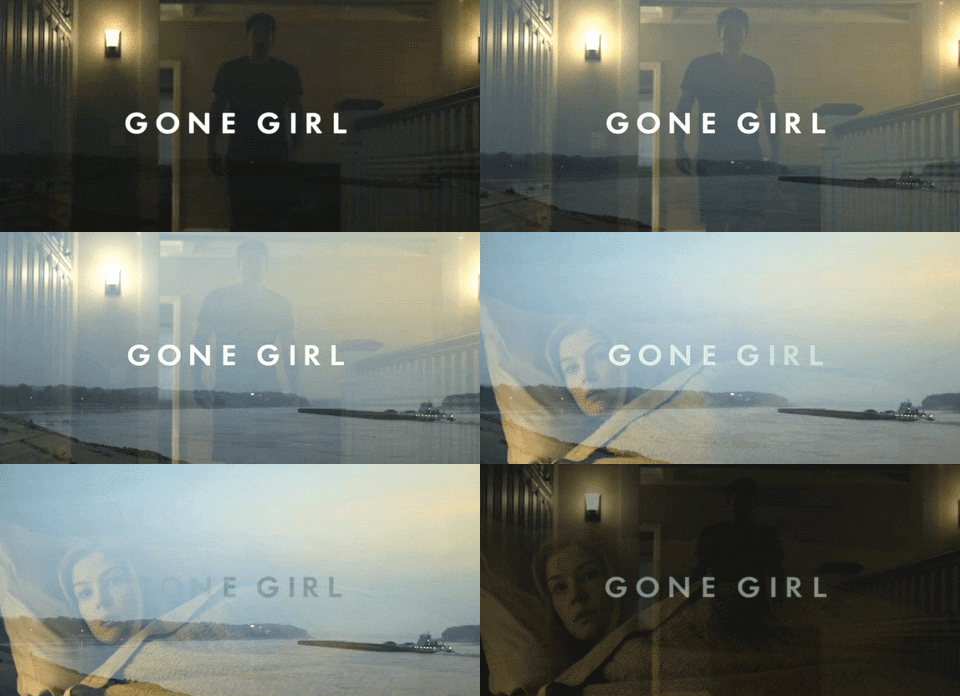
ORDER OF CREDITS:
- TWENTIETH CENTURY AND REGENCY ENTERPRISES PRESENT IDENTS
- A DAVID FINCHER FILM
- BEN AFFLECK
- ROSMUND PIKE
- GONE GIRL
- NEIL PATRICK HARRIS
- TYLER PERRY
- CARRIE COON
- KIM DICKENS PATRICK FUGIT
- DAVID CLENNON LISA BANES
- CASTING BY LARAY MAYFIELD, CSA
- SOUND DESIGN BY REN KLYCE
- MUSIC BY TRENT REZNOR & ATTICUS ROSS
- COSTUME DESIGNER TRISH SUMMERVILE
- FILM EDITOR KIRK BAXTER, ACE
- PRODUCTION DESIGNER DONALD GRAHAM BURT
- DIRECTOR OF PHOTOGRAPHY JEFF CRONENWETH, ASC
- EXECUTIVE PRODUCERS LISILE DIXON BRUNA PAPANDREA
- PRODUCED BY ARNON MILCHAN REESE WITHERSPOON
- PRODUCED BY CEÅN CHAFFIN pga JOSHUA DONEN
- BASED ON NOVEL BY GILIAN FLYNN
- SCREENPLAY BY GILIAN FLYNN
- DIRECTED BY DAVID FINCHER
The title sequence uses sans serif typography for all the text. This is a lot more understandable than serif and can be seen from a greater distance.
Subscribe to:
Posts (Atom)